Fiji Day Sails In Cyclone Season: What Actually Runs
Cyclone season in Fiji runs from November to April, and both covered day sails still operate daily through it. Here is what the Fiji Met Service outlook actually says, what each operator states about weather cancellations, and how the 24-hour free cancellation on the booking pages protects a booking.
Short answer
The Fiji Met Service says the cyclone season runs from November to April, with peak activity normally in January to March, and near-normal activity for Fiji this season. The Sabre day sail operates daily with no seasonal gap, and the Captain Cook day sail departs daily too. All three covered products carry free cancellation up to 24 hours in advance on the booking page.
A day sail booked for February sits inside the season the Fiji Meteorological Service calls cyclone season, and that single fact stops a lot of people from booking at all. The honest answer is more ordinary than the worry: the season runs from November to April, the covered day sails operate daily through it, and every one of the three products described on Fiji Sailing Day Trip carries free cancellation up to 24 hours in advance on the booking page. The decision is really about timing the booking and understanding what happens if the skipper cancels.
What Is The Fiji Cyclone Season?
Fiji's cyclone season runs from November to April, as defined by the Fiji Meteorological Service, with peak activity normally occurring in the middle of summer, from January to March. On average, around two cyclones affect Fiji each season, though the outlook for November 2026 to April 2027 suggests two to three passing through Fiji's exclusive economic zone.
Those numbers come from the Fiji Met Service outlook, which is the Regional Specialized Meteorological Centre in Nadi, and they deserve a careful read. Eleven to fifteen cyclones across the whole Nadi region sounds like a lot, and it is above the regional average of about seven. But the region the outlook covers is vast, and the number that actually touches Fiji's exclusive economic zone is two to three. The outlook also states that out-of-season cyclones cannot be ruled out, which is why the season boundary is a planning guide rather than a wall.
For Fiji itself the outlook's wording is near normal, and it is important not to swap in the regional wording. Around two cyclones affect Fiji each season on average. A cyclone is also a multi-day event, not a season-long condition: a day sail is a single seven-hour window, and the question that matters for a booking is whether severe weather sits inside that window. Neither operator page publishes wind figures, swell heights or a weather threshold, so no honest page can tell you what sea state cancels a trip. What the operators do publish is their schedule and their cancellation terms, and both are stated plainly.
One more thing the official sources do not say: no Fiji Met Service or Tourism Fiji page defines a "sailing season" or names trade-wind months. If a website tells you the best sailing months in Fiji, that is not coming from the Met. The only wind wording found on any operator page is Coral Cats Sailing Fiji's own description of its sail home on the "South East trade wind", and Coral Cats is not one of the options covered here. For month-by-month planning of a different kind, the wind and sea by month guide sticks to what is stated.
Do Day Sails Actually Run From November To April?
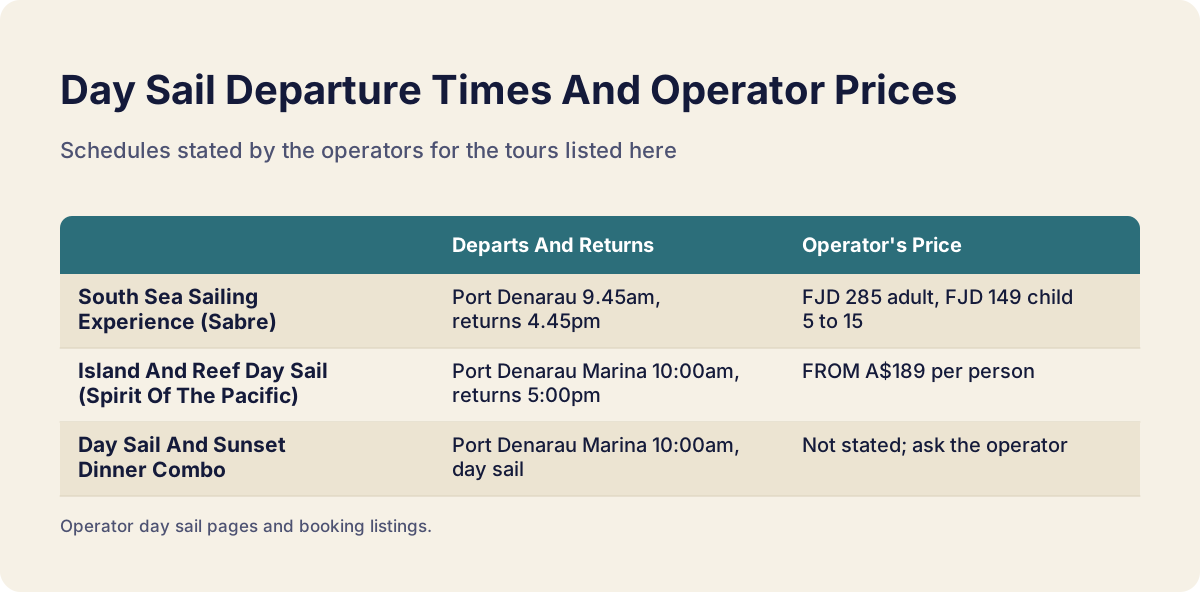
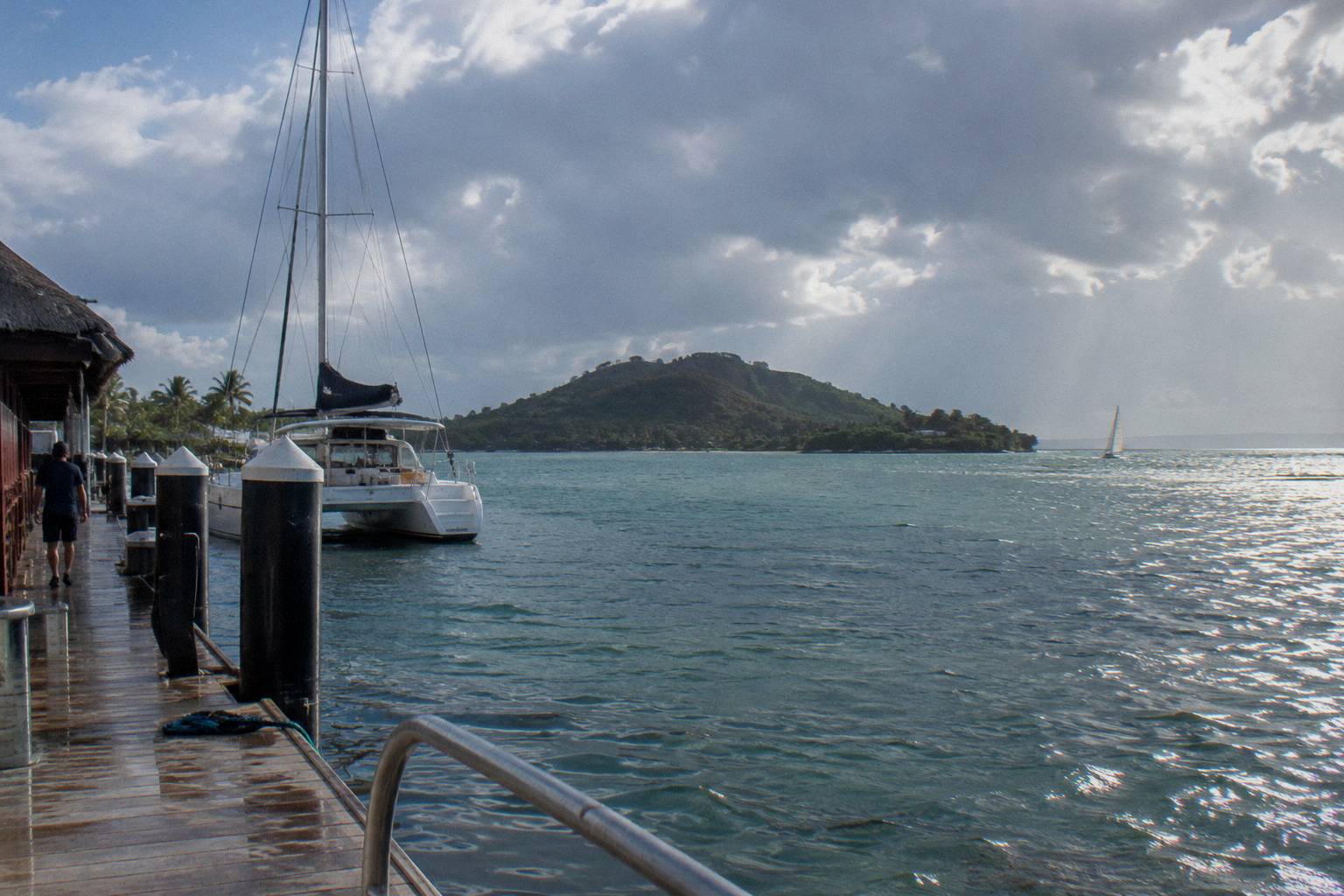
Yes, on the schedules the operators publish. South Sea Cruises states its full-day Sabre trip operates daily, with no seasonal gap, departing Port Denarau at 9.45am and returning 4.45pm. Captain Cook Cruises Fiji lists the Island And Reef Day Sail departing Port Denarau Marina daily at 10:00am and returning 5:00pm. Neither operator publishes a closed period for these day sails, so no month between November and April is officially off the calendar.
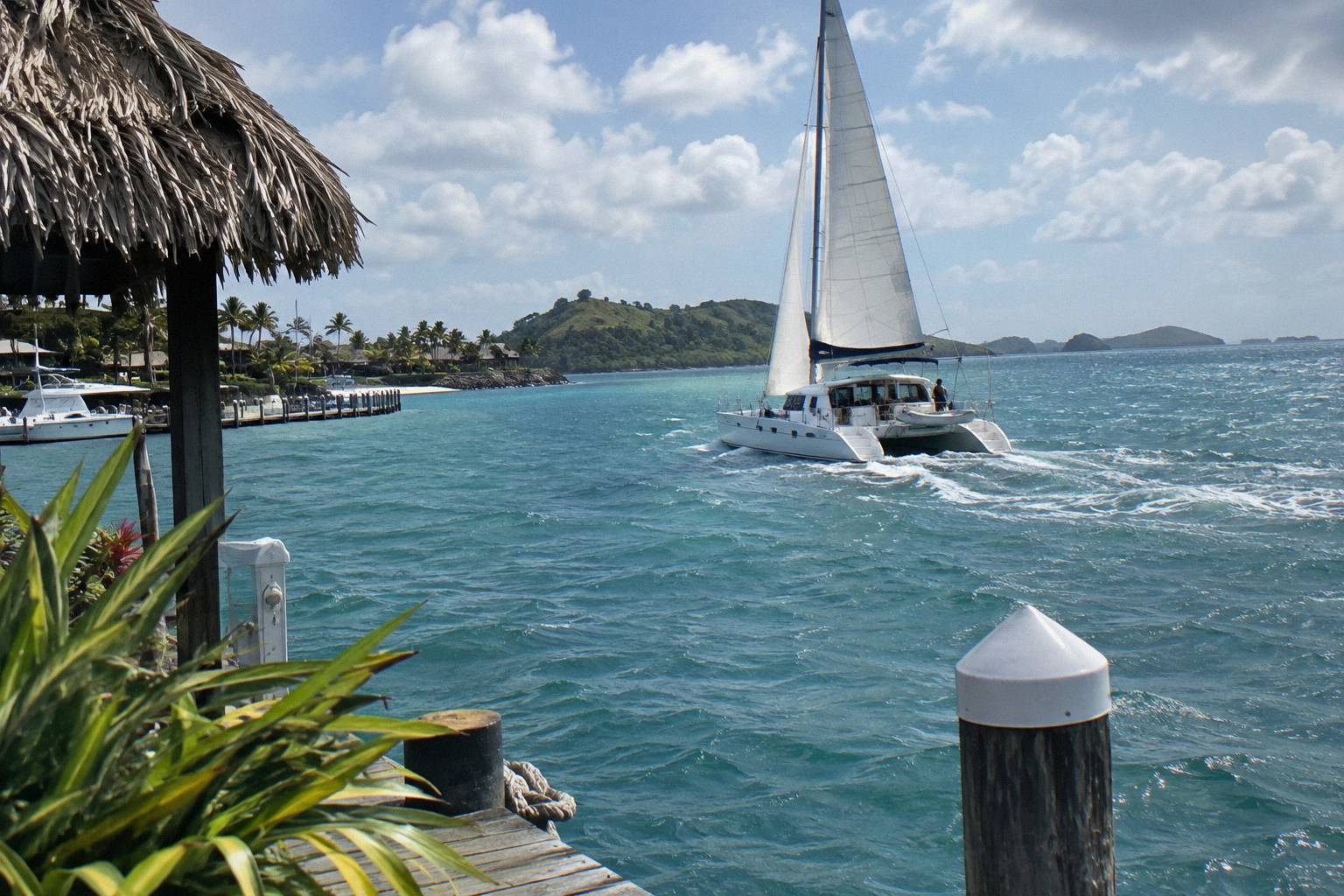
The Sabre day sail, sold by South Sea Cruises trading as South Sea Sailing, runs on the operator's day trip page as a daily product aboard the operator's 78-foot custom-built sailing catamaran. The operator says the itinerary is dependent on the warm tropical breezes and sea conditions, which means the route flexes with the day rather than shutting down for the season. Stops listed are a swim and snorkel at a tropical reef and a private island and sand cay called South Sea Cay, named on one operator page only. The listing from-price is US$127 per adult plus a per-person fuel surcharge the listing notes; South Sea Cruises' own rate is FJD 285 adult and FJD 149 child aged 5 to 15, taxes included and valid for travel to 31 March 2028.
The Captain Cook day sail runs daily on the operator's island day sail page, to Kadavu Lailai in the Mamanuca Islands, about 60 minutes cruising time from the marina per the operator FAQ. The listing from-price is US$130.87 per person; the operator's own rate is FROM A$189 per person, with no adult or child split published. The day sail and dinner combo pairs that same day sail with the Fiji Sunset Dinner Cruise on the sailing catamaran Fiji One, about 3 hours, at a listing from-price of US$200.21 per person; no operator price is published for the combo, and the operator gives 10 percent off the dinner cruise when it is combined with the day sail. Whether both legs run on the same day is not published, so ask the operator when booking.
| Product | Operator | Schedule stated | Departure | Return | Operator's price |
|---|---|---|---|---|---|
| South Sea Sailing Experience (Sabre) | South Sea Cruises | Operates daily | Port Denarau 9.45am | 4.45pm | FJD 285 adult, FJD 149 child 5 to 15 |
| Island And Reef Day Sail (Spirit of the Pacific) | Captain Cook Cruises Fiji | Departs daily | Port Denarau Marina 10:00am | 5:00pm | FROM A$189 per person |
| Day Sail And Sunset Dinner Combo | Captain Cook Cruises Fiji | Not published for the combo | Port Denarau Marina 10:00am, day sail | Not published | Not published; ask the operator |
The pattern across both operators is the same: daily departures are published, and weather is handled as a day-by-day decision, not a seasonal closure. That is the practical meaning of the season for a day sailor. The tall ship Spirit of the Pacific, as the operator's home page names it, sails the same daily schedule in February as in October, subject to the skipper's judgement on the day. If the dates are flexible, the question of which day of a trip to book the sail has its own answer on the which day to book guide.
What Happens If Your Day Sail Is Cancelled For Weather?
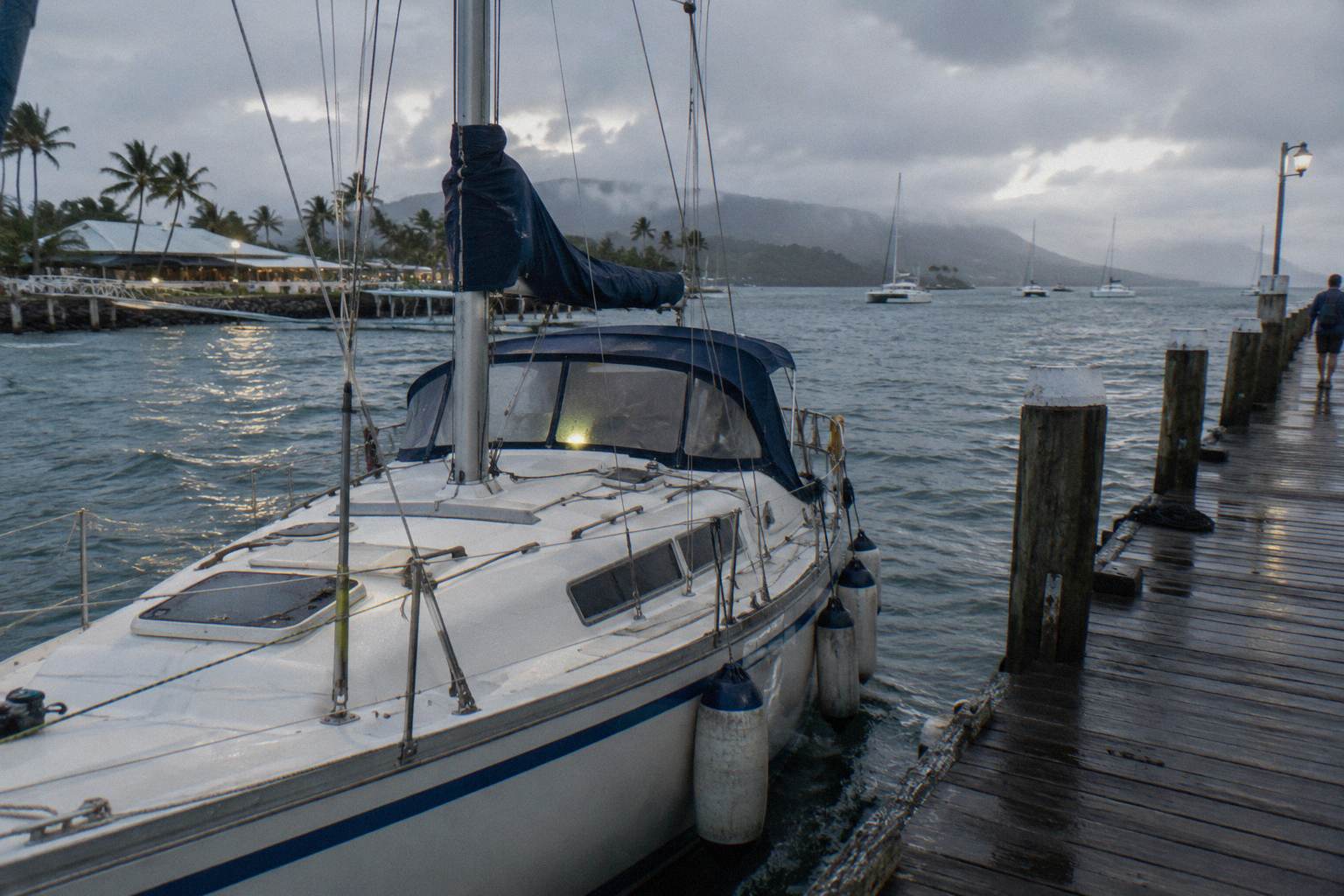
If severe weather cancels a Captain Cook cruise, the operator says the master skipper will endeavour to cancel more than 12 hours before departure, and guests who cannot change dates or transfer to another cruise receive a full refund. All three covered products carry free cancellation up to 24 hours in advance for a full refund, though South Sea Cruises' pages list no weather or cancellation policy, so ask the operator or read the booking page for the Sabre trip.
- Sailing Catamaran, Buffet LunchUS$127
- Tall Ship Day Sail, BBQ LunchUS$130.87
- Day Sail Plus Sunset Dinner ComboUS$200.21
The Captain Cook wording matters because it sets an expectation of notice. Cancelling more than 12 hours ahead is an endeavour, in the operator's own words, not a guarantee, and severe weather can arrive faster than that. What the policy does give you is a clean outcome: change dates, transfer to another cruise, or take a full refund. For a seven-hour day sail rather than a multi-night cruise, that refund path is the whole risk picture. There is more detail on the cancelled day sail walkthrough.
The 24-hour free cancellation on the booking page is the piece most readers underuse. It means a booking made for a date inside the season can be walked back a day before departure if the forecast turns, at no cost. Booked early and watched closely, a cyclone-season sail carries a narrower window of exposure than most people assume: the only unrecoverable part is the last 24 hours, and inside that window the operator's own weather policy, where stated, takes over. No operator publishes a wind or sea threshold for cancellation, and inventing one would be guessing, so treat any number you read elsewhere with suspicion.
| Product | Cancellation on the booking page | Weather policy stated by the operator |
|---|---|---|
| South Sea Sailing Experience (Sabre) | Free up to 24 hours in advance, full refund | Not published; ask the operator or read the booking page |
| Island And Reef Day Sail | Free up to 24 hours in advance, full refund | Severe weather: skipper endeavours to cancel more than 12 hours ahead; full refund if dates cannot change |
| Day Sail And Sunset Dinner Combo | Free up to 24 hours in advance, full refund | Same Captain Cook day-sail policy; dinner leg not separately stated |
One more layer sits behind the operators: the marina itself. Both day sails depart from Port Denarau Marina, which describes itself on its own about page as having 52 fully serviced berths and 16 swing moorings, with fuel, water, power and wifi on site. Passenger check-in happens at the operators' own counters in the Port Denarau precinct. The marina publishes no weather-closure rule of its own, so the skipper's decision on the day, and the operator policies above, are what govern.
When Should You Avoid Sailing In Fiji?
Peak activity normally lands in January to March, and the outlook notes its regional section says January to February; either way, the middle of summer is the busiest part of the season for cyclones. Two to three cyclones are likely to pass through Fiji's exclusive economic zone this season, and on average around two affect Fiji each season. Those are small numbers spread over six months and a large ocean, which is why the practical risk for a single day sail is handled by cancellation terms rather than by avoiding half the year. Still, a traveller with fully flexible dates who wants the lowest chance of a disruption has one official signal: book outside November to April.
| Month band | What the Fiji Met Service states | What the operators state |
|---|---|---|
| November to April | Cyclone season; peak activity normally January to March | No closed period published for either day sail |
| January to March | Peak activity normally falls here | Sabre day sail operates daily; Captain Cook day sail departs daily |
| May to October | No cyclone-season flag; no sailing-season statement either | Same daily schedules published year round |
Inside the season, the booking tactic is simple. Book the day sail early in the stay rather than on the last day, so a cancellation can be rebooked onto a later date instead of being lost to the flight home. Keep the booking inside the 24-hour free-cancellation window until the forecast for the day is clear enough to be comfortable. Accept that the skipper, not the calendar, makes the final call, and that the operator's refund path, where stated, is the backstop. That is the whole method, and it works the same in February as in July.
How To Book A Sail In Cyclone Season Without Losing Money
Book through the booking page, where free cancellation up to 24 hours in advance applies to all three covered products, so you can lock in your cyclone-season date risk-free at the listed from-prices: US$127 per adult plus a per-person fuel surcharge the listing notes for the Sabre day sail, US$130.87 for the Captain Cook day sail, and US$200.21 for the combo. Because listing prices move, check the live figure before you pay.
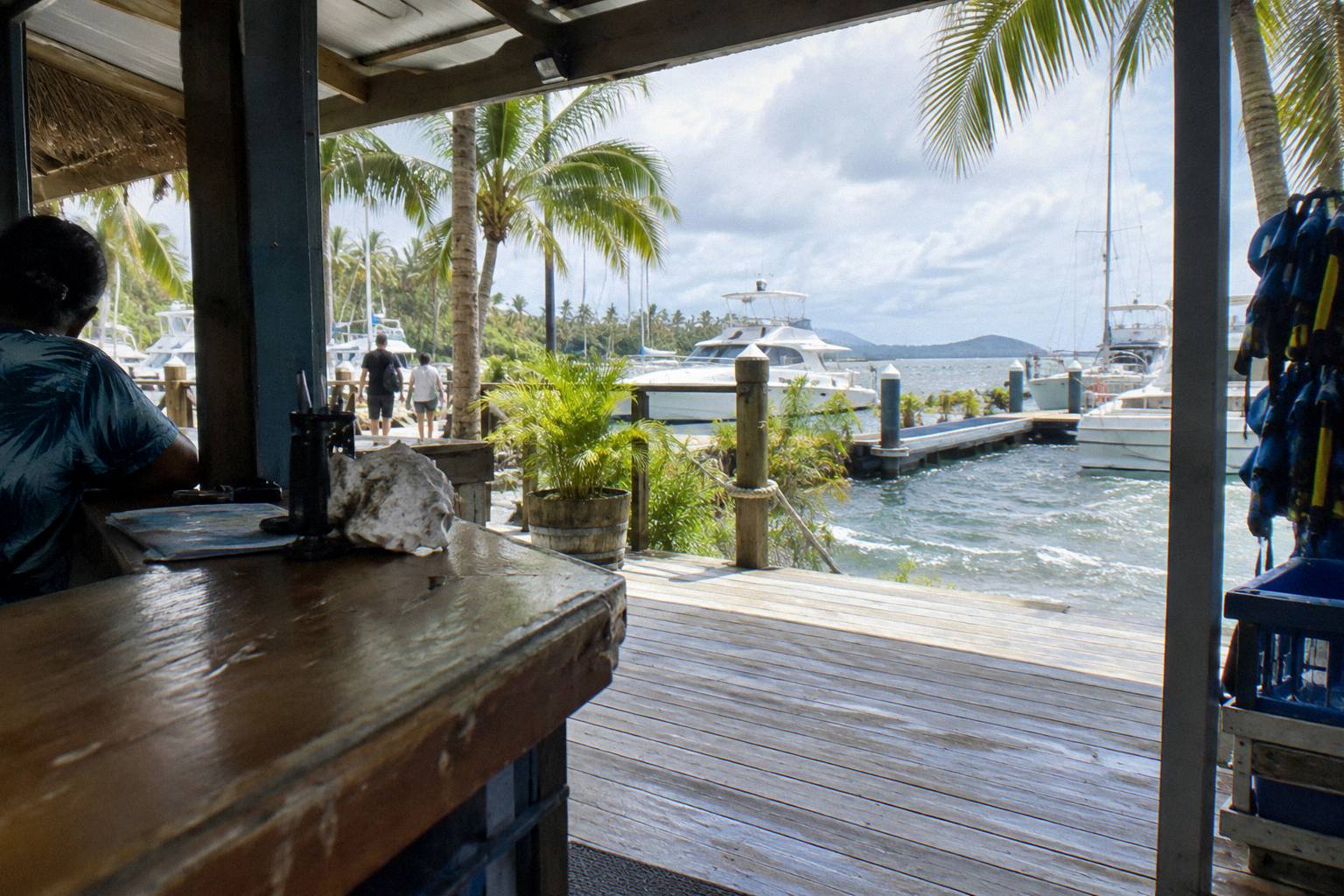
Start with the Sabre day sail if the priority is the all-inclusive day: the operator includes morning tea, a gourmet buffet lunch, soft drinks and bottled water all day, local beer and house wine from lunchtime for two hours, snorkel gear and paddleboard use at anchor, and pre-booked return coach transfers from listed hotels, with Coral Coast coach transfers charged at FJD 25 adult and FJD 15 child. Coach transfers from Nadi, Denarau, Wailoaloa, Vuda, Coral Coast, Natadola, Momi Bay and Sonaisali hotels are included in the fare except the Coral Coast coach charge. Booked early, the day can be shifted or cancelled free up to 24 hours ahead on the booking page, or check availability once the forecast for the date is settled.
The Captain Cook day sail suits a different buyer: a family with children aged 3 to 15, since child rates start at 3 where the Sabre trip bars children 4 and under, and infants 0 to 2 travel free with their own flotation device. The island day at Kadavu Lailai lists a marine-biologist-guided snorkel, glass-bottom boat tours, kayaks, stand-up paddle boards and a kava ceremony, with beer, wine and soft drinks on the island and a tropical BBQ buffet lunch. Selected Nadi and Denarau hotel transfers are included; Coral Coast, Momi Bay, Sonasali and Vuda transfers incur a fee that is not published. The operator's weather policy, cancellation more than 12 hours ahead where possible and a full refund if dates cannot change, is the clearest published among the three.
The day sail and dinner combo is the pick for a single booking that covers a full day and an evening, with the operator's 10 percent off the dinner cruise when it is combined with the day sail. The dinner leg on Fiji One includes a welcome drink, with alcoholic drinks and a lobster upgrade as extras; the menu is not published. Its rating prints as 4.5 across 25 reviews, a small count, against 4.5 across 822 reviews for the day sail alone and 4.8 across 217 reviews for the Sabre trip, each with its count and none as praise. The combo carries the same 24-hour free cancellation on the booking page, which is what makes a cyclone-season booking of a two-part product reasonable.
A note on money mechanics. South Sea Cruises says its FJD prices include taxes and are valid for travel to 31 March 2028, and card payments carry a 2.5 to 3 percent non-refundable administration fee at that operator. The Fiji Revenue and Customs Service public notice says a 5 percent Tourism Services Tax starts on 1 September 2026 for qualifying tourism services supplied or consumed from that date by businesses above the prescribed turnover threshold; read that as the notice states it and ask the operator how it applies to a fare. The two operators' prices are in different currencies, FJD and A$, and no exchange rate is published here, so compare the listing from-prices in US$ first and treat the operator rates as their own labelled figures. The wider money picture, including how fares break down, sits on the day sail cost guide.
What Trips People Up When Booking In Cyclone Season
Four mistakes trip people up: assuming cyclone season stops the boats when operators run daily, treating a regional cyclone count as a Fiji forecast when the Fiji-specific figure is two to three cyclones in the zone this season, booking the sail on your final day with no room to rebook, and assuming the 24-hour free cancellation covers a weather cancellation by the operator after that window. The last two cost real bookings, so read the terms first.
The first mistake is the calendar assumption. November to April is cyclone season per the Met, but both operators publish daily schedules through it, and neither lists a closed period. Travellers who cancel their own plans in those months, or who never book, are reacting to a closure that no operator has announced. The season is a probability statement about the region, not a schedule change.
The second is mixing up the regional and Fiji numbers. Eleven to fifteen cyclones in the Nadi region sounds alarming until it sits next to the regional average of about seven and the Fiji-specific figure of two to three passing through the exclusive economic zone, near normal for Fiji, with around two affecting Fiji each season on average. Writing "above average" for Fiji would misquote the outlook: that wording belongs to the wider region. A booking decision should rest on the Fiji numbers.
The third is scheduling. A day sail booked for the last full day of a trip has no fallback if the skipper cancels; one booked early can be rebooked later in the stay, which the Captain Cook policy explicitly allows as a date change. The fourth is misreading the cancellation terms. Free cancellation up to 24 hours in advance is the booking page's term on all three products; the Captain Cook weather policy is a separate operator statement covering severe-weather cancellations by the skipper; and South Sea Cruises' own weather policy is not published, so ask the operator rather than assuming. Anyone wanting the full terms in one place can read the booking and cancelling guide.
Common Questions About Day Sails In Cyclone Season
When Should You Avoid Sailing In Fiji?
The Fiji Met Service flags November to April as cyclone season, with peak activity normally from January to March. If dates are fully flexible, that is the only official signal for when to avoid travelling for a sail. No operator publishes a closed period for the day sails, so inside the season the decision comes down to the forecast and the cancellation terms.
Do Fiji Day Sails Run In Cyclone Season?
Yes, per the operators' own schedules. South Sea Cruises states its full-day Sabre trip operates daily, departing Port Denarau at 9.45am, and Captain Cook Cruises Fiji lists the Island And Reef Day Sail departing daily at 10:00am. Neither operator publishes a seasonal closure for these products.
What Happens If A Day Sail Is Cancelled For Weather?
For the Captain Cook products, the operator says the master skipper will endeavour to cancel the cruise more than 12 hours before departure in severe weather, and if guests cannot change dates or transfer to another cruise, a full refund is given. South Sea Cruises' own pages carry no weather or cancellation policy, so ask the operator or read the booking page for the Sabre trip.
Can I Cancel A Day Sail Booking Free Of Charge?
Yes, up to 24 hours in advance, on the booking pages for all three covered products: the Sabre day sail, the Captain Cook Island And Reef Day Sail, and the day sail and dinner combo. The refund is full within that window. Inside the final 24 hours the operator's own weather policy applies where one is stated.
How Many Cyclones Are Expected In Fiji This Season?
The Fiji Met Service outlook for November 2026 to April 2027 says eleven to fifteen tropical cyclones are likely in the Nadi region, two to three are likely to pass through Fiji's exclusive economic zone, and activity for Fiji is near normal, with around two cyclones affecting Fiji each season on average. Out-of-season cyclones cannot be ruled out.
Is January Or February The Riskiest Time To Book?
The Met outlook says peak cyclone activity normally falls from January to March, and its regional section says January to February. Those are the busiest months of the season, but no official source rates individual months for sailing, and the day sails run daily through them. Book with the 24-hour free cancellation and keep a spare day in the trip as the practical hedge.